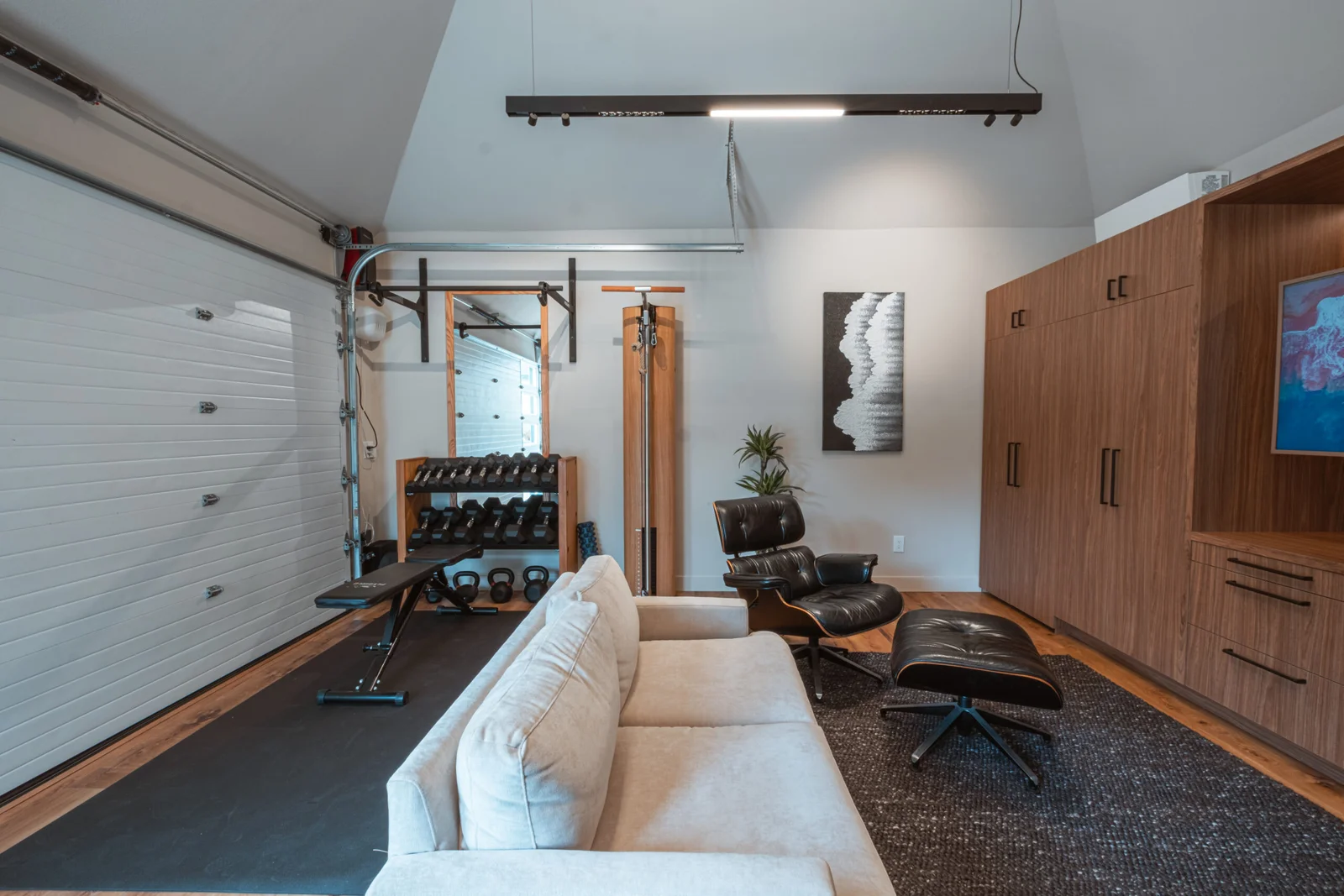

A detached home gym can be one of the most inspiring spaces on a property, but only when it is designed properly from the start.
The Mysa Hus project in Minnesota is a perfect example of why fitness and wellness spaces require more than simply plopping a bunch of random equipment in a room, or worse, the opposite problem…something we’ve coined as a white box with a peloton. This detached wellness studio was designed to support strength training, recovery, contrast therapy, outdoor connection, and the overall lifestyle of the home.
But more importantly, it had to support the story of the home itself.
Mysa Hus was designed around a wellness-forward way of living. The home was not simply built to be beautiful. It was built to support restoration, movement, connection, and a slower, more intentional daily rhythm. Because of that, the gym could not feel like an afterthought or a detached utility space. It needed to feel like a natural extension of the architecture, the landscape, and the larger wellness narrative of the property.
For Beachside Custom Gyms, this was a specialty design opportunity because the space needed to function beautifully as both a high-performance training environment and an architectural extension of the home.
A Detached Gym Has Different Design Requirements
Detached home gyms are unique because they operate more like a small standalone wellness building than a spare room inside the house.
That means every decision has to be accounted for on both the building side and the design side. On the construction side, that includes MEP coordination, ventilation, air circulation, foundation planning, ceiling height, door swings, electrical locations, plumbing needs, and how the space connects to the surrounding site. On the design side, it includes flooring, material selection, color palette, storage, lighting, equipment profile, circulation, and the overall feeling of the room.
Equipment selection cannot be an afterthought.
Unlike a traditional interior room, a detached gym often connects directly to outdoor spaces, patios, pools, saunas, cold plunges, and other wellness amenities. Those connections have to be considered as part of the design.
At Mysa Hus, the detached wellness studio was positioned as part of a larger lifestyle experience. The space connected to the exterior environment through wide doors that opened toward the patio, pergola, and pool area, creating a strong indoor-outdoor relationship.
That connection was central to the design strategy.
This was not about building a gym that happened to sit outside the main home. It was about creating a wellness destination on the property where the homeowner could train, recover, reset, and reconnect with the natural surroundings.
The Home’s Wellness Narrative Drove the Design
Mysa Hus had a very clear point of view. The home was warm, quiet, architectural, and deeply connected to the idea of wellness as a lifestyle rather than a luxury add-on.
When a home has that strong of a design narrative, and a crystal clear client buyer avatar, the gym has to participate in it. The fitness space cannot suddenly feel commercial, cluttered, loud, or disconnected from the rest of the property. It has to carry the same level of restraint and intentionality.
That influenced every decision inside the wellness studio.
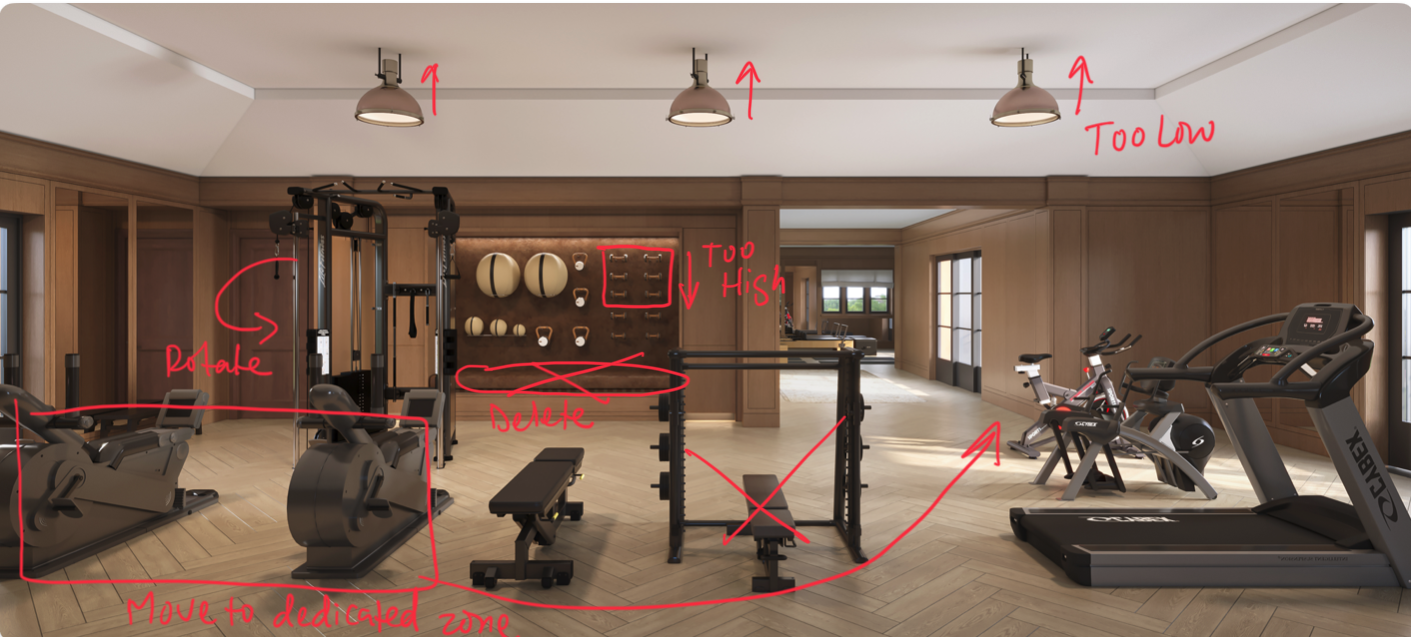
The equipment needed to be strong enough for real training, but refined enough to sit within a highly designed environment. The finishes needed to feel durable, but not cold. The recovery elements needed to support contrast therapy, but still feel integrated with the home’s exterior palette and material story.
Even the way the equipment visually interacted with the wood-clad walls and ceiling mattered.
The goal was to preserve the warmth and calm of the space while still giving the homeowner a gym that could actually perform.
What We Intentionally Left Out
For Mysa Hus, one of the easiest decisions was what to leave out.
We wanted to leave out the technology.
A lot of modern fitness spaces are consumed by screens, subscriptions, touchscreens, oversized displays, and technology-forward equipment. There is absolutely a place for those products, but they did not feel aligned with the spirit of Mysa Hus.
This home was rooted in the idea of slowing down, feeling grounded, and creating a cozy, intentional environment. The gym needed to reflect that.
For the cardio pieces, we intentionally avoided anything with a large screen or dominant display. Even if the workout was intense, the space still needed to allow for some disconnection. It should feel like your own space, not another place demanding your attention.
That decision alone helped protect the feeling of the room.
Strength Equipment That Honored the Design Language
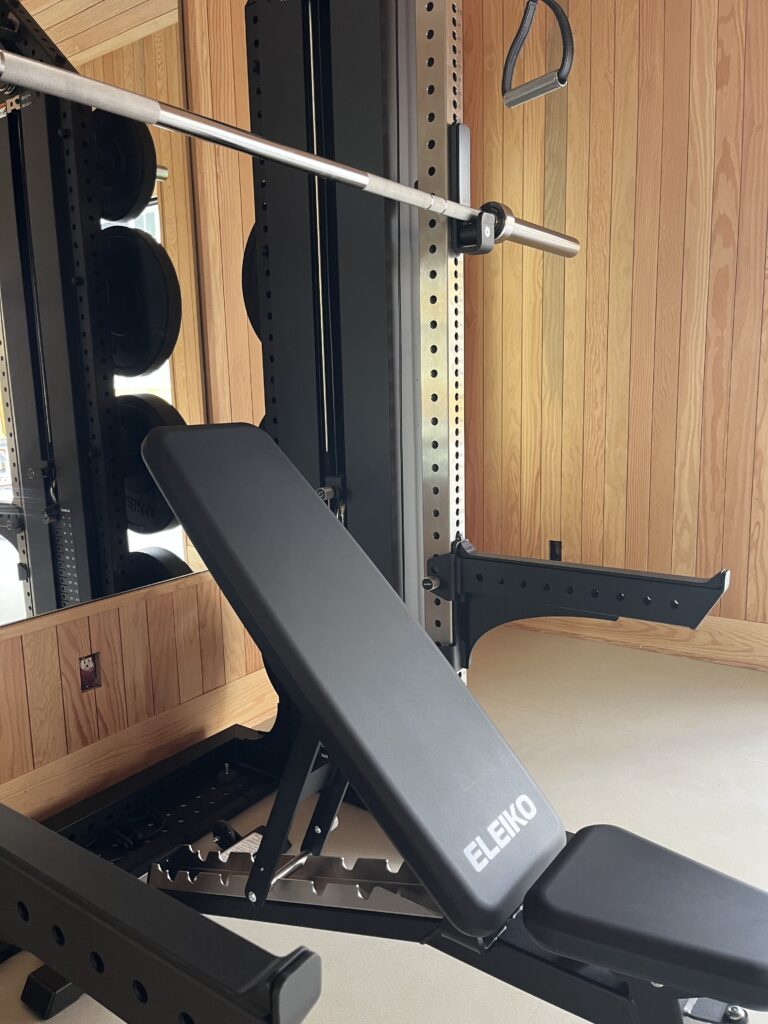
For the strength equipment, Eleiko was an intentional choice.
Mysa Hus has a Scandinavian design language, and Eleiko is a Swedish manufacturer. That connection felt incredibly aligned: a Scandinavian-inspired home paired with Swedish-made strength equipment.
But the choice was not just poetic. Eleiko represents longevity, craftsmanship, and performance. It is one of the most respected equipment manufacturers in the strength world, and it allowed the gym to feel serious without becoming visually heavy or overly commercial.
In a space like this, the equipment had to do two things at once. It had to support a high-performance training experience, and it had to feel worthy of the architecture around it.
Eleiko gave us both.
Adjustable Dumbbells Without the Visual Clutter
We also included the REP x Pépin adjustable dumbbells and stand.
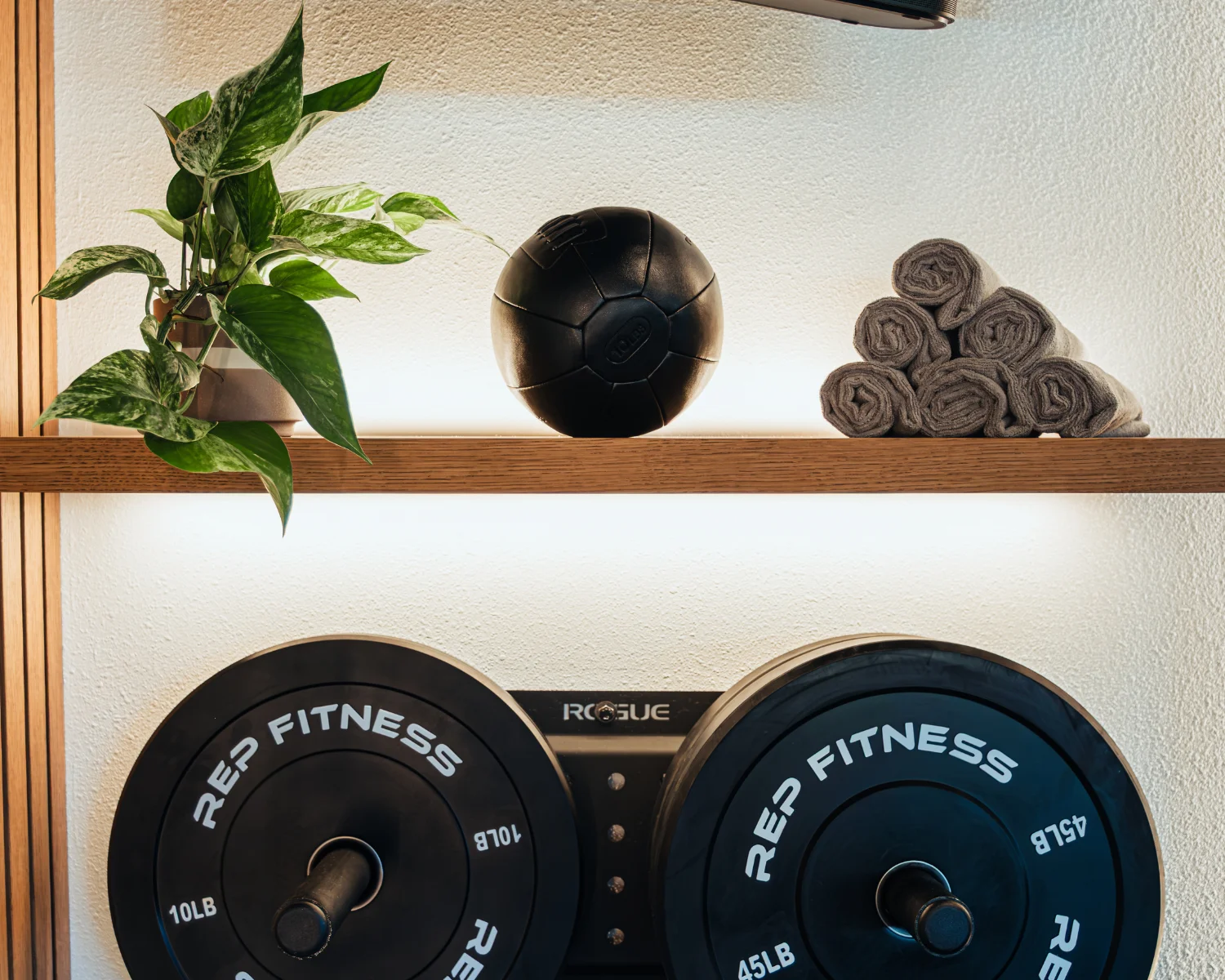
Traditional dumbbell sets are excellent from a training standpoint, but they require a lot of wall space and visual real estate. In a detached wellness studio where openness, circulation, and architecture mattered, we wanted to preserve the feeling of the room without compromising training capability.
The REP x Pépin system solved that beautifully.
It is durable, refined, and built for longevity. Unlike some adjustable dumbbells that rely heavily on plastic components, this system feels more substantial and closer to a traditional dumbbell experience.
From a design perspective, the compact footprint and minimal black profile made it an ideal fit. It gave the homeowner a wide range of strength training options without cluttering the space or competing with the wood-clad walls and ceiling.
Cardio That Did Not Compete With the Room
Cardio equipment is often where home gyms start to feel visually disconnected.
Many high-performing cardio pieces come with large screens, bold logos, bright accents, red or yellow striping, or plastic-heavy components that immediately change the tone of a space. In a commercial gym, that might be fine. In Mysa Hus, it would have felt wrong.
The Skelcore cardio selections needed to support conditioning without becoming the visual centerpiece of the room.
The goal was not to eliminate performance. It was to select pieces that could deliver performance quietly. Equipment that could do its job without pulling attention away from the architecture, the material palette, and the calming rhythm of the space.
That kind of restraint is one of the biggest differences between designing a gym and simply filling one.
A Cold Plunge That Felt Like It Belonged
For the recovery elements, materiality mattered just as much as performance.
We selected a Chilo cold plunge because it uses a stainless steel base with a white oak surround, rather than the preformed plastic shell you often see in other plunge products. That material direction felt much more aligned with the natural palette and elevated aesthetic of the home.
The cold plunge was not meant to feel like a random recovery device dropped outside the gym. It needed to feel connected to the architecture.
The white oak surround helped the plunge relate back to the warmth of the home, while the stainless steel supported durability, longevity, and a more refined wellness experience. It was practical, but it was also visually considered.
That is exactly what this project required.
A Sauna Rooted in Scandinavian Wellness
The sauna was another critical part of the wellness story.
For Mysa Hus, we introduced Symmetry Sauna because their team is exceptional at traditional Finnish sauna customization. They understand how to make a sauna feel specific to the space and the end user, rather than simply dropping in a standard product.
The sauna needed to honor the Scandinavian roots of the project while still feeling completely integrated into the home. It was part of the contrast therapy rhythm of the property: train, sweat, plunge, reset, and reconnect.
The goal was not just to include a sauna as a luxury amenity. The goal was to make the sauna feel like it belonged to the home’s wellness ecosystem.
Flooring That Supported the Wellness-First Concept
In a wellness-first gym, flooring affects durability, acoustics, comfort, air quality, and the overall feeling of the room.
At Mysa Hus, the Zandur flooring selected by Oho Interiors was a cork and rubber combination that beautifully supported the wellness narrative.
The cork brought in a natural element that felt aligned with the home’s warmth and material palette. The calendared virgin rubber helped avoid the heavy off-gassing often associated with traditional recycled rubber flooring.
A gym should support the body not only through movement, but through the materials people are breathing around and interacting with every day. The flooring decision helped reinforce the idea that wellness was not a marketing label on this project. It was built into the details.
Why Early Fitness Design Matters
One of the biggest lessons from the Mysa Hus project is that fitness and wellness spaces should be reviewed as early as possible in the planning process.
By the time Beachside was brought into the project, some of the major architectural decisions were already in place. That meant the goal was not to redesign the structure, but to review the existing plan through the lens of real-world fitness, recovery, and usability.
Even if the studio itself is beautiful, the functionality can still fall short if the equipment does not fit properly, if doors interfere with movement patterns, if there is not enough clearance around strength equipment, if electrical locations do not support cardio or recovery equipment, or if the space does not account for heat, moisture, acoustics, and airflow.
These details are easy to miss when the gym is treated like a bonus room or a flex space.
They are also much harder and more expensive to fix once the project is already under construction.
A detached gym needs to be reviewed through a very specific lens: How will someone actually move through this space? Where does the equipment go? How much clearance does it need? Where does the body move during use? Where do plugs, mirrors, doors, lights, fans, and recovery elements need to land so the space feels effortless once it is complete?
That is the difference between a room that looks good in photos and a room that works every single day.
A Wellness-First Gym Starts Behind the Walls
A wellness-first gym starts long before the equipment is installed.
It begins with what is behind the walls: insulation, wiring, ventilation, air quality, moisture control, electrical planning, lighting, and the way each system supports the long-term use of the space.
A traditional home gym often starts with, “What equipment can we fit in this room?”
A wellness-first gym asks a much bigger question: “How should this space support the body, the mind, the home, and the person using it?”
At Mysa Hus, every material decision contributed to that ecosystem. The wood-clad walls brought warmth and a natural feeling into the space. The equipment brought performance and edge. The flooring supported comfort and air quality. The recovery elements created a rhythm beyond the workout itself.
Longevity was also a major part of the wellness conversation. We selected materials and components that were built to last, including stainless steel, durable strength equipment, and pieces designed to resist wear over time.
To us, wellness is not only about how a space feels on day one. It is also about how it performs over time.
What Homeowners Can Learn From Mysa Hus
If you are considering a detached home gym or wellness studio, the Mysa Hus project offers an important takeaway:
The best time to design the gym is before the space is fully built.
Even if the structure is already planned, a specialty review can help prevent costly mistakes and improve how the finished space performs. The earlier fitness, recovery, and equipment planning are integrated, the better the end result will be.
A detached gym is not just a place to exercise. It can become one of the most valuable lifestyle spaces on the property when it is designed correctly.
It can support consistency, recovery, privacy, family wellness, and daily performance without requiring a drive to the gym or a compromise in the home’s design.
But to get there, the space has to be treated as part of the home’s design story, not as a leftover room to fill later.
Designing a Detached Gym or Wellness Studio?
Beachside Custom Gyms specializes in design-forward fitness and wellness spaces for luxury homes, detached studios, garage conversions, and private residential wellness environments.
Whether you are planning a new build, renovating an existing structure, or exploring a detached gym on your property, our role is to help align the equipment, layout, infrastructure, materials, and overall design vision before costly decisions are made.
Because a great home gym is not just about what fits.
It is about what works, what lasts, and what makes you want to use the space every day.